Global Auto Parts 2025: Accelerate or Brake? Auto Parts Supremacy (Europe • Mexico • RCEP)
Global Auto Parts 2025: Accelerate or Brake? Auto Parts Supremacy (Europe • Mexico • RCEP)
Here is the professional English translation of the automotive parts industry analysis for 2025:
I. International Opportunities
Market Growth & Regional Advantages
E-commerce Boom in Europe: With 410 million vehicles in operation and an average vehicle age exceeding 12 years, Europe's aftermarket surpasses $200 billion, growing at 3.1% annually. Sales of Chinese headlamp assemblies on German e-commerce platforms tripled in three years, while charging pile exports surged 600%.
Emerging Market Potential
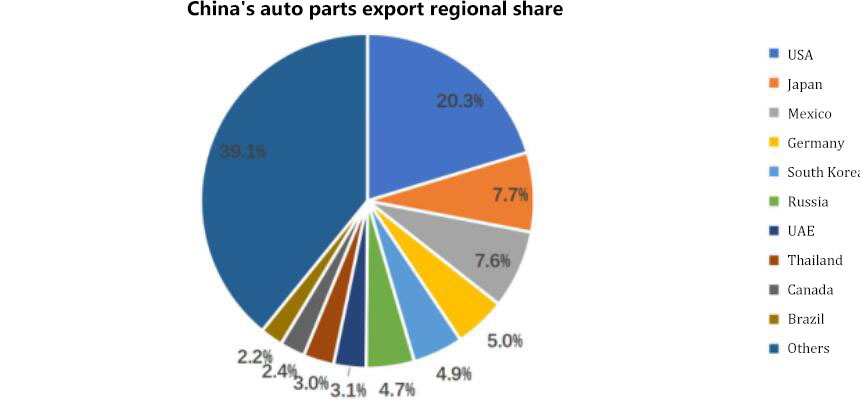
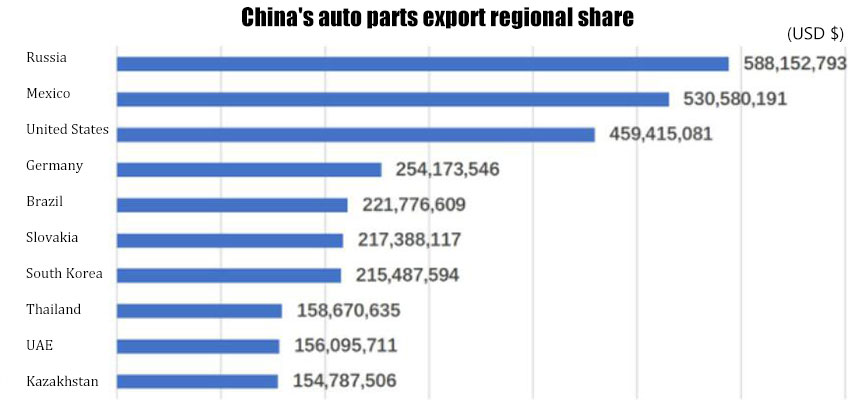
Russia: Following disruptions in Western supply chains, China became Russia’s largest auto parts supplier. Demand for NEV components is rising sharply, but 30% local assembly is required for tariff exemptions.
Southeast Asia: Leveraging RCEP tariff reductions (0-5%), exports of body panels show a 15% CAGR. Indonesia’s EV component market grows >10% annually, reaching $3 billion by 2025.
Mexico: A "nearshoring" hub for North America, demand for lithium battery modules spiked 53%. It serves as a tariff-circumvention channel for Chinese firms (19% of Mexico’s 2024 U.S. exports contained Chinese intermediates).
Regional Market Opportunity Comparison
Region Core Opportunities Growth Drivers Compliance Requirements Europe EV chargers, smart components Aging fleet, green policies CE certification, carbon footprint traceability Southeast Asia EV batteries, body panels RCEP tariffs, localized production 30% local content (e.g., Malaysia) Mexico Li-ion modules, welding equipment Nearshoring, U.S. tariff avoidance NOM certification, 75% North American content Russia NEV powertrain systems Replacing Western suppliers 30% local assembly, EAEU certification Technology-Driven Demand
Electrification: Global NEV fleet exceeds 120 million units, driving >30% export growth for batteries, motors, and controllers. CATL’s semi-solid-state batteries (1,500km range) to ship >10GWh in 2025.
Lightweighting & Smartization:
Lightweight materials (carbon fiber, aluminum) reduce NEV weight by 10%, boosting range 5-8%.
ADAS components (LiDAR, AEB systems) surge with L3/L4 adoption (e.g., Changan Auto’s 2026 full-scenario L3 plan).
After-sales Services: Battery recycling and OTA updates increase profit share. CATL-GEM collaboration achieves >98% recycling at 40% lower cost.
II. Core Challenges
Trade Barriers & Technical Compliance
Tariffs & Localization: U.S. Inflation Reduction Act mandates supply chain shifts; Mexico requires 75% North American content by 2025; Brazil imposes progressive NEV part tariffs.
Certifications: EU Battery Regulation enforces carbon labeling and recycled content (Co:16%, Pb:85%, Ni:6%); Russian parts need 6-8-month EAEU approval.
Carbon Costs: EU carbon tracing adds 12-18% costs, forcing green transitions (e.g., recycled materials).
Key Trade Barriers & Countermeasures
Region Major Barriers Compliance Cost/Time Corporate Strategies EU CBAM, Battery Regulation +12-18% cost Low-carbon production, blockchain traceability U.S. Inflation Reduction Act Local content rules Mexican nearshoring Mexico 75% North American content NOM: 6-8 months Domestic R&D + overseas assembly Brazil INMETRO certification Material durability tests 15% tax credit (local production) Supply Chain Restructuring Pressures
Localization Demands: Tariffs force "domestic R&D + overseas assembly" model. E.g., Fuzhou Liuhe Machinery’s Mexican plant faces 40% lower labor efficiency vs. China.
Competitive Shifts: Korean/European firms decline (Hyundai Mobis -19% in 2024), while Chinese players gain share via cost-tech advantages.
Operational & Financial Risks
Logistics: Cross-country specification variances in Europe raise error rates; smart warehousing (e.g., ECCANG ERP) cuts shipping costs by 20%.
Payment Security: High frozen-account rates in Africa/SEA require compliant tools (e.g., LianLian Global) to reduce FX loss.
Counterfeiting: Rising IP infringement drives chargebacks; blockchain traceability builds trust.
III. Strategic Imperatives
Tech Innovation: Develop high-value products (semi-solid-state batteries, smart chargers) certified to UL/CE standards.
Model Transformation:
S2B2C Platforms: Direct supplier-to-consumer links cut costs 15% (e.g., Shushang Cloud).
"Overseas Warehousing + Local Service": 24-hour delivery in Germany/UK boosts premium sales.
Compliance First: Secure E-mark/SIRIM certifications 6 months ahead; leverage RCEP/TTIP benefits.
Conclusion
2025 opportunities center on Europe’s NEV aftermarket, ASEAN tariff advantages, and Mexican nearshoring, but the core contest lies in balancing compliance costs with supply chain resilience . Leaders will wield certifications as shields and smart localization as spears, while S2B2C platforms and green supply chains rebuild competitiveness. Future growth engines will be ecosystem models integrating "products + services" (e.g., battery recycling, OTA updates).